Showing posts with label LECTURES. Show all posts

Sunday, June 11, 2023

Whipple '75 Discusses Biden in Office


Chris Whipple '75 spoke at the YWAA/Scarsdale Forum event, June 3, 2023 (YWAA photos).

Author Chris Whipple '75 chronicled and reviewed the first half of the Biden presidency at a special lecture in Scarsdale, June 3. His speech was part of the lecture series sponsored by the Scarsdale Forum and the YWAA speaker series, held at the Scarsdale Library.  

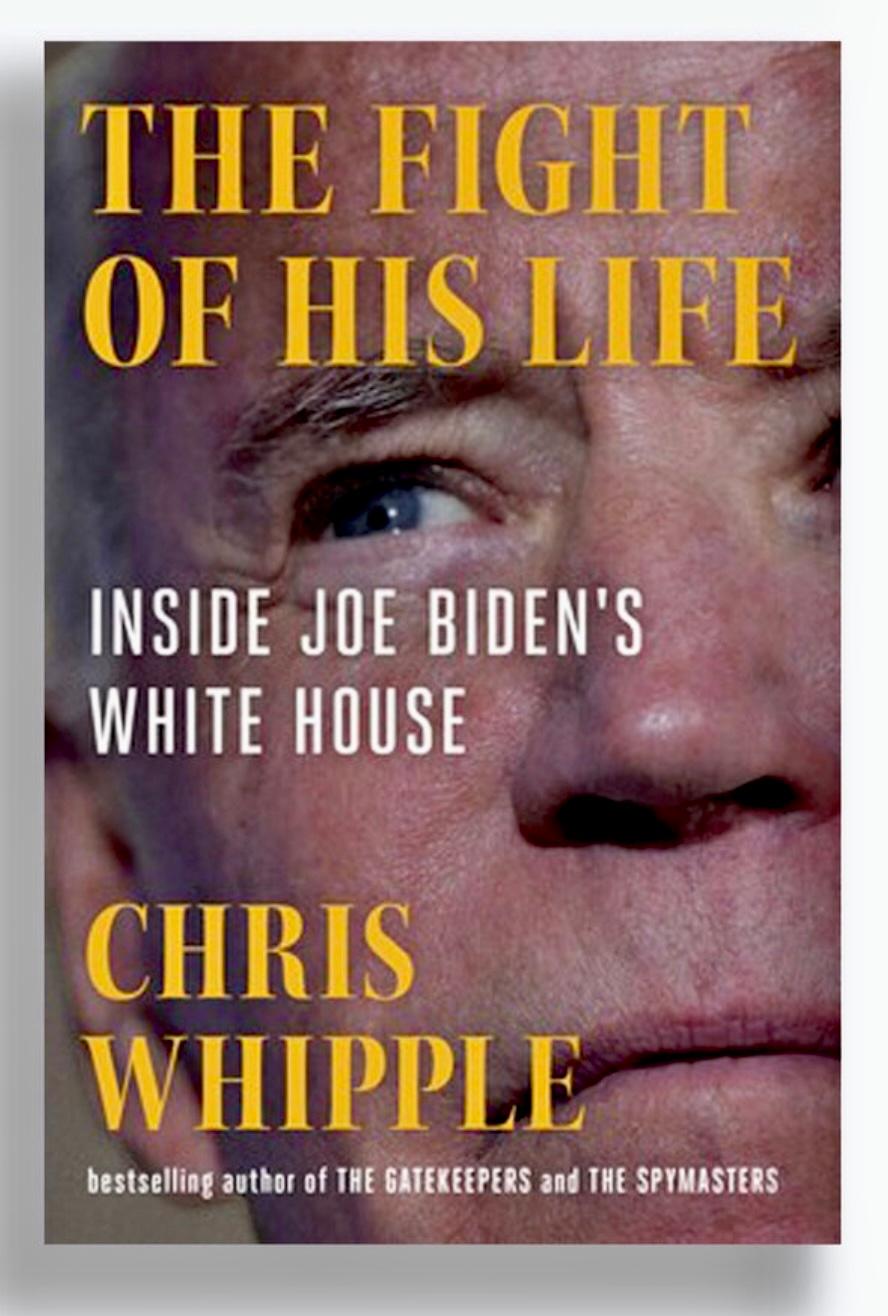
Whipple shared details from his latest publication and offered in insider's account of President Biden in office. He later signed copies of the book, The Fight of His Life: Inside Joe Biden's White House.  He is also the author of acclaimed books The Gatekeepers and The Spy Masters.

Whipple is a long-time documentarian and won Emmys as a producer at ABC News and CBS News. To purchase a copy of the new book, click Biden Presidency

About 50 people, including Yale alumni and Westchester residents, attended the event.

For more about the YWAA speaker series, click YWAA-Events


Saturday, April 22, 2023

Author Whipple Will Speak in Scarsdale

Appearing in Scarsdale June 3, Chris Whipple '75 will share observations of the Biden administration from his latest book.

Chris Whipple '75, the author, television producer and documentary filmmaker, will speak about his newly published book The Fight for His Life: Inside Joe Biden's White House at the Scarsdale Library in Scarsdale, Saturday, June 3 at 2 pm. 

The event will be hosted by the Scarsdale Forum, the Scarsdale Library and YWAA. It is also part of the YWAA lecture series, which brings Yale-affiliated speakers to Westchester. Guests can attend the June 3 event in person or register and join online via Zoom. (See below.)

Whipple's latest work chronicles the first two years of President Biden's administration, starting in its early days after the inauguration, when Biden confronted crises ranging from the pandemic to the revolt on Capitol Hill, from the conflict in Afghanistan to demonstrations against racial injustice. 

Whipple, granted access to the inner workings of the White House, provides an insider's account of the first half of the Biden presidency. 

In a review of the book in the New York Times, author John Gans wrote, "Whipple shines when, like the documentarian he is, he lets people talk....Whipple proves adept at getting members of a relatively opaque administration to play the blame game in print." 

He adds, "For any future writer eager to describe Biden's first two years, this will be the book cited first and most often."

In February, Whipple lectured on campus at Yale, sharing his Biden observations at Yale's Jackson School. The event was hosted by the School's International Security Studies program. 

He is also the author of the book The Gatekeepers (2017), which examines the responsibilities and extraordinary burdens of White House Chiefs of Staff. In January, he wrote an opinion essay for the New York Times about the impactful departure of Biden Chief of Staff Ron Klain, who is also a primary source in Whipple's latest book.

Whipple's book The Spy Masters (2021) describes the vast influence of CIA directors on U.S. history. "This book is part oral history and part old-fashioned storytelling," a reviewer for the Yale Alumni Magazine wrote in 2021. 

As a documentarian and producer, he has received Emmy awards and nominations for his work at ABC News, CBS News and Sixty Minutes.  

While at Yale, Whipple participated in the Yale Political Union, wrote for the New Journal, and played ice hockey. He majored in history. 

To register for the event (in person or via Zoom), click the link Scarsdale Library-June 3. To purchase the book online, click the link The Fight of His Life. (The library is located at 54 Olmsted Road.) Copies of the new book will be available for purchase at the event. Whipple will sign copies after he speaks.

In January, the Scarsdale Forum and Library and YWAA hosted Yale Law professor Akhil Reed Amar '80, '84 JD, who spoke about his latest book on the U.S. Constitution The Words That Made Us. Other speakers for the series have included Yale professors Paul Friedman, Laurie Santos, Meg Urry and Joanne Freeman. 


Monday, January 30, 2023

Prof. Amar: "The Words That Made Us"


Yale Law Prof. Akhil Reed Amar '80, '84 JD made a return trip to Scarsdale, Jan. 29, to present his latest book The Words That Made Us and try to convince his audience that understanding the meaning  of the U.S. Constitution was more important than the country's current attention on the results of the Eagles vs. 49ers, an NFL play-off football game that was played while he spoke in Westchester.  

In a lively 60-minute lecture and spirited 30-minute Q-and-A session, he stated his case and shared well-informed opinions on any current political issue or trend on the country's plate in 2023. He stated firmly U.S. citizens have a responsibility to learn and understand the U.S. Constitution. He referred to the U.S. signing of the Constitution in 1787 as the country's "Big Bang" event. 

Prof. Amar, a Sterling Professor of Law and Political Science and an acclaimed scholar on the topic, was a guest lecturer for the Scarsdale Forum and YWAA Speaker Series at the Scarsdale Library.   In 2016, he spoke at a similar YWAA-Scarsdale gathering, presenting his book The Law of the Land: A Grand Tour of the Constitutional Republic. At that time, he focused on the 2016 presidential election. 


At the Scarsdale lecture Jan. 29, Prof. Amar addressed the Constitution's importance and impact in 2023. As the worst of the pandemic disappears, Prof. Amar said he wanted to be the "virus" that infects U.S. citizens to encourage them to read, study and understand sections of the Constitution.  The Words that made the U.S. (the Constitution), he said--pun intended, are "the words that made us."

About 50 community members and Yale alumni attended the lecture in person; another 17 dialed in via Zoom. 

He highlighted the differences in what other popular Yale-graduate historians (Ron Chernow '70 and David McCullough '55) write about (American history) vs. what he teaches and writes about (American history and Constitution Law). 

For the alumni in the audience, he provided data to show the vast influence of Yale graduates in U.S. Government, based on top leadership positions in all three branches today and through history (U.S. Congress, Supreme Court and the U.S. Presidency). Many in those roles today, he appointed out, had been his students at Yale. 


To purchase the book, click The Words That Made Us.

For more about other speakers in the YWAA Lecture Series, click LECTURES.


Monday, January 9, 2023

Yale Law's Amar Returns to Scarsdale


Prof. Akhil Reed Amar is scheduled to present a lecture on his area of expertise, the U.S. Constitution, in Scarsdale, Sunday, Jan. 29 (Yale photo)

Yale Law School Professor Akhil Reed Amar '80, '84JD will return to Westchester to speak at the Scarsdale Forum in Scarsdale, N.Y., Sunday, Jan. 29, 2023, at 3 p.m. The event is co-sponsored by the Yale Westchester Alumni Association (YWAA) and is part of the Scarsdale Forum Sunday Speakers Series. 

The Scarsdale Public Library will host the event in its Scott Room (54 Olmsted Road). See link below for those who wish to join via Zoom. 

Prof. Amar, one of the most popular faculty members on campus and one of the most renowned scholars of the U.S. Constitution, has taught at Yale Law School since 1985. He has written numerous books on the Constitution and will discuss his most recent book, The Words That Made Us, his study of "America's constitutional conversation" from 1760-1840.

The event is open to all, including Yale alumni, families and friends, and will be streamed via Zoom.

Mark Spencer, reviewing the book in The Wall Street Journal described it as a "masterly synthesis of history and law." Reviewer Adam Cohen in The New York Times Book Review described the book, published in 2021, as a "deeply probing, highly readable study of America's (Constitution)."

Prof. Amar was also a guest speaker in the lecture series in May, 2016, when he focused on the upcoming presidential election in the U.S. in that year.

In his 2012 book, America's Unwritten Constitution: The Precedents and Principles We Live By, Prof. Amar claimed the Constitution must be read "as a whole rather than as a jumble of discrete clauses." In 2015, he wrote The Law of the Land: A Grand Tour of Our Constitutional Public.

He has written opinion pieces for The New York Times, The Washington Post and The Atlantic.

The YWAA lecture series the past decade has also hosted other prominent Yale professors, including Prof. Paul Freedman who spoke about the culinary and restaurant history in America (2019), Prof. Laurie Santos who outlined keys to happiness as part of her globally popular "Happiness" course at Yale (2019), Prof. Marc Lapadula who announced his list of the top six films that influenced the American film industry (2018), Hugh Price '66L who once led the National Urban League (2017), Prof. Joanne Freeman who chronicled "dirty stories" of American politics in the 1790s (2015), and Prof. Meg Urry who introduced her Westchester audience to the "black holes" of physics (2014).

For more about Prof. Amar's previous lecture and about the YWAA Lecture Series, click on the links below:

YWAA: Prof. Amar, the Constitution and the Presidential Election of 2016

YWAA Lecture Series

To participate via Zoom, click on the link to register:

Sunday, December 15, 2019

Freedman Explains "American Cuisine"

Yale Professor Paul Freedman returned to Scarsdale Dec. 11 to discuss his new book about American cuisine (YWAA photos)
After the success of his first book Ten Restaurants That Changed America, Yale Professor Paul Freedman responded with an encore that describes the uniqueness of American cuisine. The newly published book is entitled American Cuisine: And How It Got This Way. Freedman's day job or primary profession on campus in New Haven is professor of medieval history. Nowadays he has become a national expert of American restaurants, American cuisine, Americans' food habits, and the evolution of it all over the past two centuries.

In the day job, Freedman for years has studied the history of what people ate and how they prepared food in medieval times. That study spawned a special interest in food preparation and food trends beyond those times and with focus on America, especially factors that explain changes over time.

On Dec. 11 in Scarsdale, Freedman returned to Westchester to discuss his new book as part of the YWAA lecture series. (The event was co-sponsored by the Scarsdale Library and the Scarsdale Women's Club.)  It gave him an opportunity to explain for his audience what characterizes "American cuisine," what makes it unique in the eyes of the rest of the world. He described the good, the bad, the popular, and current trends and observed that, for the most part, American cuisine has improved remarkably over the decades. 

Only here in this country, Freedman said, Americans will say, "I don't want Thai food tonight, because I had Thai food recently," when they seek to eat out. People in Thailand, Freedman added, don't get to say that. Yet that describes the American food scene today, where restaurant patrons here get to pick from cuisines of Thailand, India, China, Italy and Vietnam on any given evening and don't have to return to it for awhile. 

American cuisine indeed, he said, represents foods from different countries, although since the late 19th century, immigrants have prepared some dishes to accommodate the tastes of Americans or at least to their expectations of what that food should be. Freedman reminded the Scarsdale audience that some foods we think of as ethnic or having originated elsewhere are ethnic-inspired dishes that were invented right here--eggplant parmesan and chop suey, for example. 

American cuisine, too, Freedman said, is cuisine developed over time for evolving, fast-changing, and rushed lifestyles.  TV dinners and other processed foods (with sugary flavors) did just that. 

In March, 2017, at the YWAA-sponsored lecture, Freedman presented his first book, reminding his audience then it wasn't a list of the Ten Best, but a list of the Ten Most Influential. Hence, Howard Johnson's makes that list. The second book was a natural next step, not to select what is good or bad, but to explain what the cuisine has been and what it might be. The book is also an off-shoot from his popular undergraduate food course taught at Yale. 

In Dec., 2019, audience members asked him to assess the current American focus on healthy foods and the farm-to-table movement.  Freedman paid tribute Alice Waters, the founder of the acclaimed Chez Panisse restaurant in Berkeley, Calif., and who in the last decade has worked with Yale to improve the food offerings at Yale College. 

Click American Cuisine to purchase the book on Amazon. Rich Fabbro '76, YWAA director, organized the event.

Freedman responds to questions from the Scarsdale audience, Dec. 11 (YWAA photos)


Friday, November 22, 2019

Freedman's History of American Cuisine


Yale history professor Paul Freedman, speaking at YWAA in 2017, will return to Westchester (Scarsdale) to speak about his new book, American Cuisine and How It Got That Way, Dec. 11. (YWAA photos)
Paul Freedman, Yale professor of history, who has developed a reputation and following as an expert on American cuisine and restaurants will return to Westchester to speak in Scarsdale about his new book American Cuisine and How It Got This Way, Wednesday, Dec. 11 at 7:30 pm.

Yale alumni, guests and members of the community are invited to attend the event, part of the YWAA lecture series coordinated by YWAA director Rich Fabbro '76. The event will be co-sponsored by the Scarsdale Women's Club and the Scarsdale Library.

In Mar., 2017, Freedman was in Scarsdale to share research stories about his book Ten Restaurants That Changed America, a list that includes Delmonico's, the Four Seasons, Howard Johnson's and Mama Leone's.  His roster of ten didn't attempt to name the 10 best, but the 10 most influential in the last century. 

In his new book, Freedman chronicles the evolution of American cuisine from colonial times until today. He describes tastes and preferences based on regions, standards and cultures. He examines the California food revolution starting in the 1970s. He looks back at the launches of dry cereal, key lime pie and chicken Parmesan. And he celebrates the influences from immigrants and assesses the food scene in America today.  

Freedman will lecture at the Scarsdale Women's Club on 37 Drake Road in Scarsdale.  The event is free and open to the public. To register to attend, click FREEDMAN

In Mar., 2019, in Chappaqua, the YWAA lecture series hosted Yale psychology professor and Head of Silliman College Laurie Santos, who described why her course "Psychology and the Good Life" (the popular course on "Happiness") has attracted thousands of students at Yale and in online offerings. In May, 2018, Yale screenwriting professor Marc Lapadula discussed his six films that influenced America cinema in a YWAA-sponsored lecture in Chappaqua. 

Other YWAA-sponsored speakers have included Yale law professor Akhil Reed Amar '80, '84 JD, Yale history professor Joanne Freeman, and Yale physics professor Meg Urry. 


In his first book on American cuisine and restaurants, Freedman (above) named Delmonico's restaurant (above, R) as one of the top 10 restaurants that changed America. 

Friday, March 8, 2019

Santos Offers Happiness Tips

Yale professor Laurie Santos offered ten tips for happiness at her lecture in Chappaqua, Mar. 8 (YWAA photos)
Laurie Santos, Yale's professor of psychology whose Yale "Happiness" course has spawned national (and even global) attention, came to Westchester Mar. 7 to offer area alumni and other guests 10 tips for achieving a state of happiness.

Addressing a crowd of about 150 at the Chappaqua Performing Arts Center, Santos summarized her semester-long course into an hour-long presentation. The lecture was part of the YWAA lecture series, coordinated by YWAA board member Rich Fabbro '76. The Chappaqua Library was also a co-sponsor of the event.

The "Happiness" course is more formally called "Psychology and the Good Life." In Chappaqua, Santos explained its origin and her expectations that it would draw only 40-50 students.  Last year, by the time Yale's course-shopping period was over, the course had attracted over 1,200 Yale students, so large that the venue had to be moved to Woolsey Hall. Media outlines from around the world (including The New York Times) found out about the course, all curious about why large numbers of students on elite campuses struggle with happiness and feeling good about themselves.

Santos in Chappaqua explained the state of mental health on campuses like Yale, especially as students struggle with lofty goals and limited amounts of time to accomplish what they put on their already-crammed agenda.  She described how she has observed students as Head of Silliman College. She designed the course, gained approval to present it and prescribed simple tasks on the syllabus for students during the semester ("Send out thank-you notes to special people").

After the widespread attention, Santos and Yale now offer the course online via Coursera ("The Science of Well-Being"). She said over 200,000 "learners" have participated from dozens of countries around the world.

At the Westchester lecture to a throng of rapt listeners older than her students, Santos offered ten tips to happiness.  They included the obvious and the less than obvious. The obvious, she suggested, include getting more sleep (about 7.4 hours/night), exercising more regularly, and meditating. As a professor would do, she provided research to substantiate her tips. She lectured how people can control their efforts to achieve happiness.

The less-than-obvious included spending more money for the benefit of others (and not ourselves) and expressing gratitude to others in writing and in person. Write thank-you notes, she recommended, deliver them and read them in person--a requirement she asked of her students. She recommended people avoid "mind wandering." Stay in the moment, and focus on your current self, she advised.

Tip number 2 on her list? "Our life circumstances don't matter as much as we think."  "You can become happier, but it takes work and daily effort" was her Tip number 3.

In the wake of such popularity and because of demand, Santos is planning a happiness podcast and heads to California soon to continue to spread her tips at another Yale-related event.

YWAA and the Chappaqua Library hosted a reception in her honor after the lecture.

YWAA board member Rich Fabbro, coordinator of the lecture series, introduced Santos to the Chappaqua audience (YWAA photos)
 
As Head of Yale's Silliman College, Santos observed student practices and habits in their daily lives. (YWAA photos)

Santos said she initially expected only 40-50 students to join a course that eventually enrolled over 1,000 Yale students (YWAA photos)

Friday, February 22, 2019

Santos Lecture in Chappaqua, Mar. 7

Yale professor Laurie Santos will deliver the "happiness" lecture to Yale alumni and guests in Chappaqua Thursday, Mar. 7 (Yale photos)
Laurie Santos, the Yale professor of psychology, who teaches the most popular course on campus, the course that describes and analyzes states of happiness and humans' quest to achieve them, will deliver a lecture on the topic to Yale alumni and guests in Chappaqua at the Performing Arts Center Thursday, Mar. 7 pm. The public is invited to attend the free event (at 480 Bedford Rd.).

YWAA is co-sponsoring the event with the Chappaqua Library and the town of New Castle. Rich Fabbro '76 , YWAA board member, leads the lecture series.

The event is part of the YWAA lecture series that brings prominent Yale professors to Westchester to address topics within their disciplines or to speak about other pressing issues of the moment. In recent years, YWAA has invited Yale professors of astronomy, history, law, English, political science and drama.

Last year screenwriting professor Marc Lapadula explained his list of the 10 most important films in American history.  In 2017, history professor Paul Freedman had just written a favorably reviewed book Ten Restaurants That Changed America and spoke in Scarsdale about how he came up with his list.

At Yale, Santos teaches "Psychology and the Good Life," the course that last year drew 1,200 students--not online, but in person on campus.  (She has taught the same, however, as an online offering to the public.) The course (also called "The Science of Well-Being") has drawn wide attention, including last year in the New York Times.

Santos, who also acts as head of Silliman College at Yale, is not teaching the course this semester, but will present highlights of the course at the Chappaqua lecture.

"With one in Yale students taking it," Santos told the Times, "if we see good habits, things like students showing more gratitude, procrastinating less, increasing social connections, we're actually seeding change in the school's culture."

Santos received undergraduate and doctorate degrees in psychology from Harvard and has taught at Yale since 2003.

Wednesday, December 12, 2018

YWAA: Save the Date, 2019


Yale a cappella groups the New Blue and the Spizzwinks (top and above R) will sing in Chappaqua Feb. 3. Yale psychology professor Laurie Santos will address Yale alumni and guests in Chappaqua Mar. 7. (New Blue, Spizzwinks and Yale photos)
Sunday, February 3

The Spizzwinks and the New Blue, a cappella groups from Yale, will perform in concert at Horace Greeley High School in Chappaqua, Sunday, Feb. 3, at 1 pm.

The Spizzwinks return to Westchester after performing in Scarsdale in 2013 and 2015. The group plans to sing in Iceland, Seattle and China this coming spring and summer.

The New Blue is Yale's oldest female a cappella group, formed in 1969, the year Yale's undergraduate population included women for the first time. Laura Clapp '21 of Scarsdale and Anna-Sophia Boguraev '20 of Bedford sing with New Blue.

In 2018, the Whiffenpoofs and Red, Hot & Blue performed in separate concerts in Rye.

YWAA will host the concert. Details will follow.

Thursday, March 7

Yale psychology professor Laurie Santos will present a lecture to Yale alumni and friends in Chappaqua.  Details will follow.  Santos is best known for having taught arguably the most popular course ever among Yale undergraduates, "Psychology and the Good Life," when over 1,200 students enrolled last spring.

The course is also known as the "Happiness" course and is labelled "The Science of Well-Being" in an online adaptation of the same.

Santos also acts as Head of Silliman College at Yale.

The scheduled lecture is part of YWAA lecture series.  Click YWAA Lectures for more about the series and Yale professors who have visited Westchester over the last several years.


Monday, June 25, 2018

Six Films That Changed America

YWAA's lecture series resumed in Chappaqua May 29 when Yale's Marc Lapadula spoke on America's most influential movies. (YWAA photos)
Yale screenwriting professor Marc Lapadula came to Westchester May 29 to unveil and explain his list of what he considers as the six most important movies in American history.

Before a Chappaqua audience of 80 Yale alumni, guests and Westchester neighbors, Lapadula outlined his list, explained his rationale, and entertained comments and questions:

The Jazz Singer
I Am a Fugitive From a Chain Gang
The Graduate
Easy Rider
Jaws
Philadelphia

Lapadula has taught film and media studies at Yale for 26 years. His courses also include seminars in playwriting, film analysis, and screenwriting. 

While Lapadula selected movies, YWAA guest lecturer and Yale professor Paul Freedman in 2017 spoke about the 10 restaurants that changed America.

Lapadula's visit (at the Chappaqua Library) was part of the YWAA lecture series, organized by YWAA board member Rich Fabbro '76.

Saturday, May 5, 2018

America's Most Influential Movies

Yale Professor Marc Lappadula (above) will explain how he put together his Big Six of important U.S. movies at the Chappaqua Library, Tuesday, May 29 (Yale photos)
Marc Lapadula, the popular film and media studies professor at Yale, has selected six films that changed America.  The Graduate, Easy Rider, and Jaws made the list, but his list might surprise some.  I Am a Fugitive From a Chain Gang, a 1932 film that received three Academy Awards and tells the story of a convict who escapes to Chicago, appears on Lapadula's list.

Lapadula will explain to a Yale Westchester audience why certain movies changed America or altered how Americans watched and approached cinema.  As part of YWAA's ongoing lecture series, he will speak at the Chappaqua Library in Chappaqua, Tuesday, May 29 at 7 pm.  Yale alumni and the public are invited to attend the free event.

Lapadula's List of Six also includes Philadelphia and The Jazz Singer. His selections were based on film works that ultimately had long-term social impact on America. At Yale, where he has taught for 26 years, his courses include seminars in screenwriting, playwriting, and film analysis.  His plays have been produced in New York, England, and in other parts of the U.S.

A Penn graduate, Lapadula has also taught in adjunct roles at Columbia, Penn and Johns Hopkins.

The YWAA lecture series, dating back several years, has included other Yale professors in history, physics and political science in recent years.  Professor Paul Freedman discussed his new book Ten Restaurants That Changed America in Scarsdale in 2017.  Law Professor Akhil Reed Amar '80, '84JD, an acclaimed expert on the U.S. Constitution, spoke about the U.S. presidential election in 2016.

Board director Rich Fabbro '76 leads the YWAA lecture series.

Wednesday, December 20, 2017

Price to Speak at Jay Heritage Center

Hugh Price '66 Law will be one of three speakers featured at the Jay Heritage Center in Rye, Jan. 15, at an event organized by the American Women of African Heritage.

Hugh Price '66 Law, Yale Law Graduate, New Rochelle resident and a former President and CEO of the National Urban League, will be one of three featured authors who will speak at Jay Estate in Rye, Jan. 15 (2-5 pm), as part of the celebration of Martin Luther King's birthday. Price will be joined by authors Brenda Ross and Tiffany D. Jackson. 

This year he published his memoir This African-American Life, which recounts his years growing up in Washington, D.C., his days at Yale Law School and working in the New Haven community, and programs he pursued while at the Urban League. 

The Annual Literary Tea, held at the Jay Heritage Center for the fourth straight year, is sponsored by the American Women of African Heritage.

Price has been affiliated with the Yale Center for International and Area Studies. In Westchester, he served on the board and was a Chairman at the Jacob Burns Film Center in Pleasantville.  He headed the National Urban League from 1994-2003. During his time there, he established the Institute for Opportunity and Equality. He is also the author of Mobilizing the Community, Getting Your Child the Best Education, and Achievement Matters.

While at Yale Law School, he was executive director of the Black Coalition of New Haven, which was instrumental in providing legal services to low-income families.  Before becoming CEO at the Urban League, Price held posts at the New York Times (editorial board) and the Rockefeller Foundation.

At the National Urban League, he focused on education, youth development, and economic empowerment in African-American communities. He also launched the Campaign for African American Achievement program.

A graduate also of Amherst College, Price has taught at the Woodrow Wilson School of Public Policy at Princeton.

Speaker Brenda Ross is the author of Bibsy, a love story that captures small-town, African-American life.  Tiffany D. Jackson wrote the novel Allegedly, selected by many reviewers as one of the best young-adult novels of 2017.  Her novel Monday's Not Coming will be published in June.

Suzanne Clary '83 is president of the board of trustees at the Jay Heritage Center. The Center hosted Yale history professor Joanne Freeman as part of the YWAA speaker series in Dec., 2015.

For more about tickets ($65/person) for the Martin Luther King Day event, contact franteek@aol.com or jayheritagecenter@gmail.com.  Or call the Center at 914-698-9275.

Friday, March 31, 2017

Freedman Explains His Top Ten

In Scarsdale, Mar. 30, Yale professor Paul Freedman, author of "Ten Restaurants That Changed America," described how he came up with his list. (YWAA photos)
 Yale history professor Paul Freedman's new book, Ten Restaurants That Changed America, has spawned lively discussion among food circles around the country.  What restaurants made the list? What restaurants didn't?  How did he select the top ten? What were the criteria? And how does a history professor in New Haven, an expert in medieval studies, carve out time to write about the history of eating habits in this country over the past century and a half?

Freedman, a guest lecturer at the Scarsdale Library, Mar. 30, as part of the YWAA speaker series, explained his favorite hobby to an audience of about 100 Yale alumni, friends and Westchester residents.  The book, he reminded all, "is not about the best restaurants," but about those that had the most influence on where Americans eat out, why they choose to do so, and what they eat when they venture beyond home dining. 

His list includes familiar names (Delmonico's in Downtown Manhattan, the recently closed Four Season in Midtown, Antoine's in New Orleans, and Sylvia's in Harlem).  It contains puzzling selections, until Freedman explained carefully (in his book and in Scarsdale) why they must be included:  Schrafft's of New York lore, national chain Howard Johnson's, and Mama Leone's, the lone Italian restaurant on his list. 

Critics have praised the book and applauded his diligence and research. He approached culinary history in the manner of, yes, a medieval historian by studying archives, examining tattered menus, roaming the country, interviewing food experts, and analyzing original sources. Freedman presents a story of Americans deciding at some point in history to indulge in eating by simply going outside the home. 

Freedman observes the "amalgam" of ethnic cuisines, thanks to immigrants from all global corners or thanks to African-Americans migrating to the North and bringing southern recipes and tastes with them (Sylvia's, e.g.).  The panoply of ethnic cuisines in America, he showed, has been around longer than we know. In Scarsdale, he showed a New Yorker cover from 1938 with a cartoon drawing of several ethnic-restaurant settings (Chinese, Middle East, Italian, French, etc.).

He said Delmonico's, where menus in the mid-19th century included Maryland turtles as a high-end offering, was likely America's first restaurant that was a "gastronomical destination." It was America's first high-end French restaurant without being a real French restaurant.  Howard Johnson's, he said, makes the list because it's the first restaurant where the menu and cuisine were the same at every Ho-Jo site. Howard Johnson's offered Americans familiarity and consistency. 

Freedman described New York's Schrafft's as a destination for "respectable New York women," who would often order a rich banana split after sampling a light green salad, where his grandmother frequented, but his own mother avoided.  With Schrafft's, he discussed the possibility of women having unique eating preferences or the likelihood that women of long ago chose foods differently when not accompanied by men. 

He highlighted the cozy, low-back seating arrangements at the Four Seasons, a purposeful design to ensure faithful (and famous) followers could see and be seen. 

Freedman's list is about history and influence and not a forecast of trends and fads. No restaurant in the book was founded after the 1970's.  Mama Leone's has closed.  The Four Seasons will reappear in varying (and uncertain?) incarnations. Schrafft's disappeared in the Reagan era, and Howard Johnson's is but a tiny shell of its once expansive self. 

His Scarsdale audience rushed to follow his presentation with questions or their own observations about food history, habits and trends.  

Freedman noted his list resulted in no Mexican or Japanese restaurants.  There were also no steak or barbecue places.  He said the French Laundry in Napa Valley might have been no. 11 or 12 on the list, if he were permitted to extend the list.  

Audience members asked why the 21 Club in Midtown and Windows of the World in the old World Trade Center were not considered (for influence, if not cuisine).  He said "21 was mostly about atmosphere and networking," where the Four Seasons had already established a foothold. The 21 Club, he added, was the among first to get away with selling a very expensive hamburger. Windows of the World, he remembered, was a "style pioneer with good wine."  

Others asked his impressions about commonplace eateries in hospitals, airports and museums.  (He suggested a museum restaurant in Chicago was a favorite.) Others solicited his views of favorite New York deli haunts, such as Carnegie Deli and Katz's Deli.  "Katz's is celebrated," Freedman said, "like Strand Bookstore (in Greenwich Village), the last book store standing."

Someone asked why certain restaurant types have never gained popularity in the U.S. Hungarian restaurants and food, he replied, have an "undeserved image of heaviness."  Philippine restaurants have been "a hard sell," while Indian restaurants thrive, but are frequently run by immigrants from Bangladesh. 

Freedman, identifying a Yale tie at a mostly Yale event, noted Alice Waters of Chez Panisse fame (and included in his top 10) sent her daughter to Yale and helped revolutionize how Yale Dining cultivates ingredients and prepares food in the residential colleges.  

And Danny Meyer, best known these days for igniting the hamburger sensation that is Shake Shack, also a Yale parent, wrote the introduction to the book. 
In Scarsdale, audience members wanted to know about restaurants that didn't make the list, about current trends in eating, and about why certain cuisines are more popular than others. (YWAA photos)

Friday, March 17, 2017

Yale's Freedman in Scarsdale, Mar. 30

As part of YWAA's lecture series, Yale professor Paul Freedman, author of a new book on the history of impactful restaurants, will speak at the Scarsdale Library, Thursday, Mar. 30.  Delmonico's (above) made the Top Ten list.
The YWAA lecture series resumes Thursday, Mar. 30, in Scarsdale, when Yale history professor Paul Freeman will discuss his new book, Ten Restaurants That Changed America.

Yale alumni, guests, and those interested in Freedman's explanations for why certain restaurants made or didn't make special list are invited to attend. There is no admission fee. The Scarsdale Library will host the event (which starts at 7 pm). Copies of the book will also be on sale.

Freedman is the Chester E. Tripp Professor of History at Yale and the Chair of the History of Science and Medicine Program. Event guests won't need to wait until Mar. 30 to learn what restaurants earned a spot on his well-researched list. (See below)

The book, published earlier this year, has been praised by book reviewers and food critics around the country:

"(This) is a book as much about the contradictions and contrasts in this country, as it is about its places to eat," wrote Jane Kramer in the New Yorker.

Joe Yonan of the Washington Post said, "(Freedman) effectively makes the case that the story of America's restaurants is one of changing immigration patterns, race relations, gender and family roles, work obligations, and leisure habits."

"(Freedman) suggests that it's not ultimately restaurants that change America. It's the people in the kitchen," Victorini Matus at the Wall Street Journal wrote.

"Culinary historians, those besotted with food culture, and curious general readers will all find something of value in this well-researched, entertaining social and cultural history," Kirkus Reviews summarized.

Fabio Parasecoli, Director of Food Studies at the New School, said, "Freedman's engrossing and well-researched exploration of the restaurant as an American institution presents us with a gallery of unforgettable characters, iconic dishes, and unique place."

Author Fredrick Kaufman called Freedman "one of the world's most learned food writers."  Harvard professor Joyce Chaplin said the book is "exactly what the very best American food has always been." Food writer Molly O'Neill said Freedman's book is "the most important and entertaining book on the subject of food...in years."

Rich Fabbro '76, YWAA board member, who leads the lecture series, organized the event.

Delmonico's, New York
Antoine's, New Orleans
Schrafft's
Mamma Leone's, New York
Howard Johnson's
Le Pavillon, New York
Sylvia's, New York
The Four Seasons, New York
The Mandarin, San Francisco
Chez Panisse, Berkeley, Calif.

Monday, January 16, 2017

Freedman Presents His Top Ten

Yale Professor Paul Freedman will discuss his new book at a talk in Scarsdale, Mar. 30
Yale Professor Paul Freedman's "day job" is his role as professor of medieval history.  At Yale, where he has taught for 20 years, he has also served as chair of the history department and director of undergraduate studies in history.

His special interest or favorite passion is the history of cuisine and trends in eating out.  Last year after exhaustive review, the New York native and current Pelham resident set out to identify the 10 most influential restaurants in American history, restaurants that set standards or trends and changed eating habits outside the home. 

The outcome?  He finished a new book, Ten Restaurants That Changed America, published by Liveright/Norton this past fall and much discussed and talked about, if not debated.

Freedman will speak to Yale alumni and guests in Scarsdale at the Scarsdale Public Library Thursday, Mar. 30 at 7 pm.  He will explain why some restaurants made the list and why some didn't. Copies of the new book will be available for sale. Many of the restaurants are no longer in existence, but that doesn't diminish their importance in the history of Americans eating out.

Freedman's talk is part of the YWAA lecture series that brings Yale professors to Westchester to discuss their subjects, current projects or latest work.  In recent years, the series has featured professors in astrophysics, history and law. 

Readers of his book don't have to churn hundreds of pages to find out his Top Ten.  The list appears on the cover (and below).

In New Haven, an increasingly important hub for interesting, diverse cuisine (and everybody's hot spot for the best in pizza), Freedman told the New York Times that his favorite pizza place there is Zuppardi's Apizza (actually located in West Haven).

Delmonico's, New York
Antoine's, New Orleans
Schrafft's
Mamma Leone's, New York
Howard Johnson's
Le Pavillon, New York
Sylvia's, New York
The Four Seasons, New York
The Mandarin, San Francisco
Chez Panisse, Berkeley, Calif.


Monday, June 6, 2016

Boscobel, 2016: MacBeth

YWAA hosts its annual Shakespeare evening, Aug. 14, at Boscobel in Garrison, NY. MacBeth is this year's featured performance.
This summer, on the shores of the Hudson, where YWAA and Yale alumni in the region partake in a Westchester tradition, Shakespeare's tragedy MacBeth comes to Boscobel for the annual Yale Sunday under the big white tent in Garrison, NY.

YWAA will host alumni, family and friends Aug. 14 for the Hudson outing. The day includes the annual lecture from Yale Shakespeare expert Murray Biggs, a picnic with expansive views of the curving river, and the 7:30 pm curtain call for the Hudson Valley Shakespeare Festival's presentation of the Bard of Avon, often with modern twists, turns, costumes, and swagger.

Save the date. Prepare for an afternoon and evening with Yale friends. Don't forget to bring a picnic basket and perhaps a notebook to summarize Biggs' insights. Take time to stroll the grounds of Boscobel before the performers swarm a stage best known for its leafy background and entrances where characters emerge from the horizon. The show goes on, whether or not it rains.

In recent years, the Yale gathering listened to Biggs' lectures and watched Shakespeare's Othello, The Winter's Tale, All's Well That Ends Well, Hamlet, Love's Labour Lost, and A Comedy of Errors.

To purchase tickets to the Biggs lecture (4:30 pm at the Hastings Center) and to the performance that evening, click YWAA-Boscobel.

Sunday, May 15, 2016

Amar and the Constitution in Scarsdale

Yale Prof. Akhil Reed Amar spoke at the Scarsdale Library, May 10, and his lecture was like "a really good Yale lecture that had students hanging out after class."  (YWAA photos)

By all accounts from New Haven, Yale Law School Professor Akhil Reed Amar '80 '84JD is a favorite, popular lecturer on campus, an experienced instructor who brings  content to life and keeps students on edges of seats begging for more.  He is an expert on the U.S. Constitution and--just as much--an expert in analyzing what Founding Fathers might have had in mind and explaining the vast interpretations of the old document.

As part of YWAA's lecture series, Amar spoke to alumni, guests and neighbors in Scarsdale, May 10, and bedazzled his audience in the  way he thrills his students in the Law School and at Yale College. In his mostly extemporaneous talk, which included a lively Q-and-A session, Amar was exuberant, engaged, and entertaining.

His talk, "The Constitution and the Presidential Election of 2016,"  touched all bases and hot buttons--from the left to the right, referring occasionally to analyses from one of his many books.

His latest book, The Law of the Land:  A Grand Tour of our Constitutional Republic, was published last year. He is finishing a book, The Constitution Today:  Timeless Lessons for the Issues of Our Era, that will be published in late 2016. He has written opinion pieces on current issues and the Constitution for The New York Times, the Washington Post, and the Atlantic.

Amar knew his audience, which included lawyers who learned a little bit more about Constitutional law and non-lawyers who followed him in step and were inspired to spar with him to ask him anything they wished. It was like, one observer said, "a really good Yale lecture that had students hanging out after class for more questions and arguments after class."

The YWAA series, led and organized by YWAA board member and treasurer Rich Fabbro '76, invites prominent Yale professors to Westchester to lead discussions on their areas of expertise, favorite projects and programs or recent publications. The Scarsdale event was hosted by YWAA board members Fabbro and B.K. Munguia '75.

Thursday, April 14, 2016

Amar Comes to Scarsdale, May 10

Yale Law Professor Akhil Reed Amar '80, U.S. Constitution expert, will speak to alumni and guests in Scarsdale, May 10 (Yale photos)
Yale Law School Professor Akhil Reed Amar '80 '84JD, one of the most popular faculty members on campus and one of the best known scholars of the U.S. Constitution, will speak to alumni and guests in Scarsdale, May 10, as part of YWAA's ongoing lecture series.  The series, led and organized by YWAA board member and treasurer Rich Fabbro '76, invites prominent Yale professors to Westchester to lead discussions on their areas of expertise, favorite projects and programs or recent publications.

Amar will give his talk, "The Constitution and the Presidential Election of 2016," at the Scarsdale Library (54 Olmsted Rd.) at 7:30 pm.

Yale history Professor Joanne Freeman presented a lively lecture on "Dirty Politics" and America in the early years after the Revolution last December.  Physics Professor and Department Head Meg Urry spoke about and explained with colorful slides "Galaxies and Black Holes," also in Scarsdale, in 2014.

In 2012, Amar wrote America's Unwritten Constitution: The Precedents and Principles We Live By.  Reviewer Ken Gormley in the Washington Post called the work "a masterful, readable book that constitutes one of the best, most creative treatments of the U.S. Constitution in decades." In the book, Amar claims the Constitution must be read "as a whole rather than as a jumble of discrete clauses."

Amar has written opinion pieces on current issues and the Constitution for The New York Times, the Washington Post, and the Atlantic.

His latest book, The Law of the Land:  A Grand Tour of our Constitutional Republic, was published last year. He is finishing a book, The Constitution Today:  Timeless Lessons for the Issues of Our Era, that will published in late 2016.

"Amar is a respectful critic of conservative originalism (in interpreting the Constitution)," Princeton Professor Robert George wrote in the New York Times in 2012. "He takes the written text seriously as limiting judicial freedom of maneuver, but argues that the Constitution is more than the text, even when supplemented by its original understanding."

George wrote in reviewing one of his books: "Amar insists that the idea itself (of an unwritten interpretation of the Constitution) is sound...(but) needs rescuing from its abusers."

During the 2016 presidential-election season, Amar has been asked to interpret whether candidate Ted Cruz, born in Canada, is eligible to be U.S. president.  "I do not embrace Ted Cruz politically," he wrote in CNN.com in January and outlined a lengthy layman's argument to support Cruz's eligibility.  "But I do embrace his right to run for president, and so should you."

Sunday, February 21, 2016

Alumni College: Spring "Blue Book"


Even Alumni College has its own version of the Yale Blue Book for this spring's courses (Yale photos)

Most Yale alumni, of all classes, remember grabbing for the Yale "Blue Book," as soon as it was published and made available to undergraduates.  A favorite Yale ritual was to curl up, find space alone and explore the hundreds of courses Yale planned to offer during a school year.  Some students gathered for informal "Blue Book" parties.  Most made notes, dog-eared dozens of pages, and tried to do the near impossible:  pick the five, six, or seven courses from among about two-dozen favorites to launch the two weeks of "shopping period."

Alumni agree, too, that studying course descriptions of such course titles as the "English Literary Tradition," "Calculus of Several Variables," "Democracy and its Critics," or "Daily Themes" thrust students into the mood for starting a semester of classes after a break ended.

(Yale's light-blue course catalogue has been presented online for years now, but students have regularly requested printed hard copies to thumb through and make notes or just have as a keepsake.)

AYA and its Alumni College program have announced AYA's version of the Blue Book, this spring's courses that will be offered to alumni in this region and around the country.  It isn't as stock-piled as the familiar Blue Book, but the courses offered by Yale professors or Yale graduates replicate some of the most popular topics that are taught in New Haven today or at other institutions.

Courses offered within an hour's drive (or two) of Westchester are listed below. Most courses meet weekly during evenings for several weeks. (Registration and fees are required.)  Alumni are encouraged to explore (in the same way they plowed through a Blue Book!) and consider enrollment. If we can't return to Yale and if we certainly can't go back in time, then a pinch of Yale's academic heft comes to the New York region.

Click AYA-ALUMNI-COLLEGE to register.

An Introduction to the Psychology of C.G. Jung:  Kendrick Morris '77 MDiv '01 MST , an expert on Jung and highly regarded minister and psychologist in Connecticut, will present Jung's teachings on how to live effectively and happily in the second half of a life. Jung claimed older adults, with different perspectives and life demands, can find ways to have richer lives.  The course will be offered Mar. 8-Apr. 7, Tuesdays (7 pm) in Rye.

How to Read a Photograph:  In Princeton, Michael Jennings '76 MA, who teaches at Princeton, will present an introduction to the history of photography and help participants in his class interpret photographs and study some of the best known photographers, including Walker Evans and Garry Winogrand.  Topics will cover "reality effect" and emulsion-based vs. digital photography. The course is scheduled for Mar. 24-Apr. 28, Thursday evenings.

Cuba's Economic and Cultural Transformation:  In Philadelphia, Enrico Sacerio-Gari' '78 Ph.D. will teach an overview of Cuba's history and recent current events.  Topics will include the economic embargo, Obama's re-engagement, and case studies in economics and culture.  Sacerio-Gari' teaches Hispanic Studies at Bryn Mawr.  The course will be held Wednesday evenings, Mar.16-Apr. 20.

The Composer's Voice:  In Greenwich, Libby Van Cleve '92 DMA is director of the Yale Music School's Oral History of American Music.  This spring, her course will permit participants to listen to taped interviews of well-known composers, who explain important aspects of their works. The class will study the words and works of Duke Ellington, Aaron Copland, Charles Ives '98, and John Cage. Van Cleve, an accomplished oboist, will hold classes Mar. 23-Apr. 27, Wednesday evenings.

Fiction, the Monstrous, and the Limits of the Human:  In Manhattan, Gordon Turnbull '86 Ph.D., who at one time was the course director of the aforementioned "English Literary Tradition" course taught at Yale, will lead a seminar in literature studying such classics from the past 60 years as Lord of the Flies, The Day of the Triffids, Never Let Me Go, and The Left Hand of Darkness. The course, Part II from a fall course, will be offered Mar. 7-Apr. 11, Mondays.

What Is a Classic?  In Manhattan, Michael Holquist '68 Ph.D., a Yale professor emeritus in Comparative Literature, will teach a selection of familiar classics (The Iliad and Crime and Punishment, e.g.) and lead discussions of what makes a work of literature a "classic" and how should "classics" be defined today.  The course will be scheduled for Mondays, Mar. 7-Apr. 18.

Hearing Voices:  Modern Poets in Disguise:  In Manhattan, Paul Kane '90 Ph.D., a Vassar professor in English, will show how major poets, including T.S. Eliot, use voices other than their own to express themselves.  Class participants will read Eliot, Yeats, Frost and Pound and use a method of purposeful "slow reading."  The class will meet Mondays, Mar. 8-Apr. 18.

South Africa:  White Supremacy and the Roots of Apartheid:  In New Haven, Harvey Feinberg '60 will teach the development of apartheid in South Africa, when it was established in 1948, how it was extreme, how impactful it was on black life, and how it can be compared to periods in U.S. history.  Classes will be held Mar. 8-Apr. 12, Tuesdays. 

Opera in Cinema:  In New Haven, Judith Malafronte of the Yale School of Music will teach an introduction to opera, focusing on productions from the Metropolitan Opera Company (live transmissions) and the process of putting on an opera (libretto, dramaturgy, casting, language and rehearsal). Malafronte also taught an Alumni College on opera in Rye last year.  The course will meet Wednesdays Mar. 9-Apr. 27.

Drawing the Human Figure:  In New Haven, Lisa Helgrave '85 MFA will use live models and permit class participants to improve drawing skills and explore form, proportion, structure, volume and composition.  The course will meet Thursday afternoons Mar. 10-Apr. 21.